


Modern manufacturing depends on assembly tools and equipment that perform consistently throughout long production runs. Whether a facility produces vehicles, industrial machinery, electronics or other assembled products, even a relatively small tool failure can disrupt the production process. For this reason, spare parts should not be treated simply as items to order when something breaks. They are an important part of maintenance planning, production reliability and long-term equipment management.
Having the right spare parts available makes it easier to respond quickly to wear, unexpected failures and scheduled maintenance. At the same time, effective spare-parts management is about more than filling a storeroom with components. Manufacturers need to understand which parts are critical, how frequently they are likely to be replaced and how spare-parts availability affects the wider production system.
Spare parts are an important part of production reliability
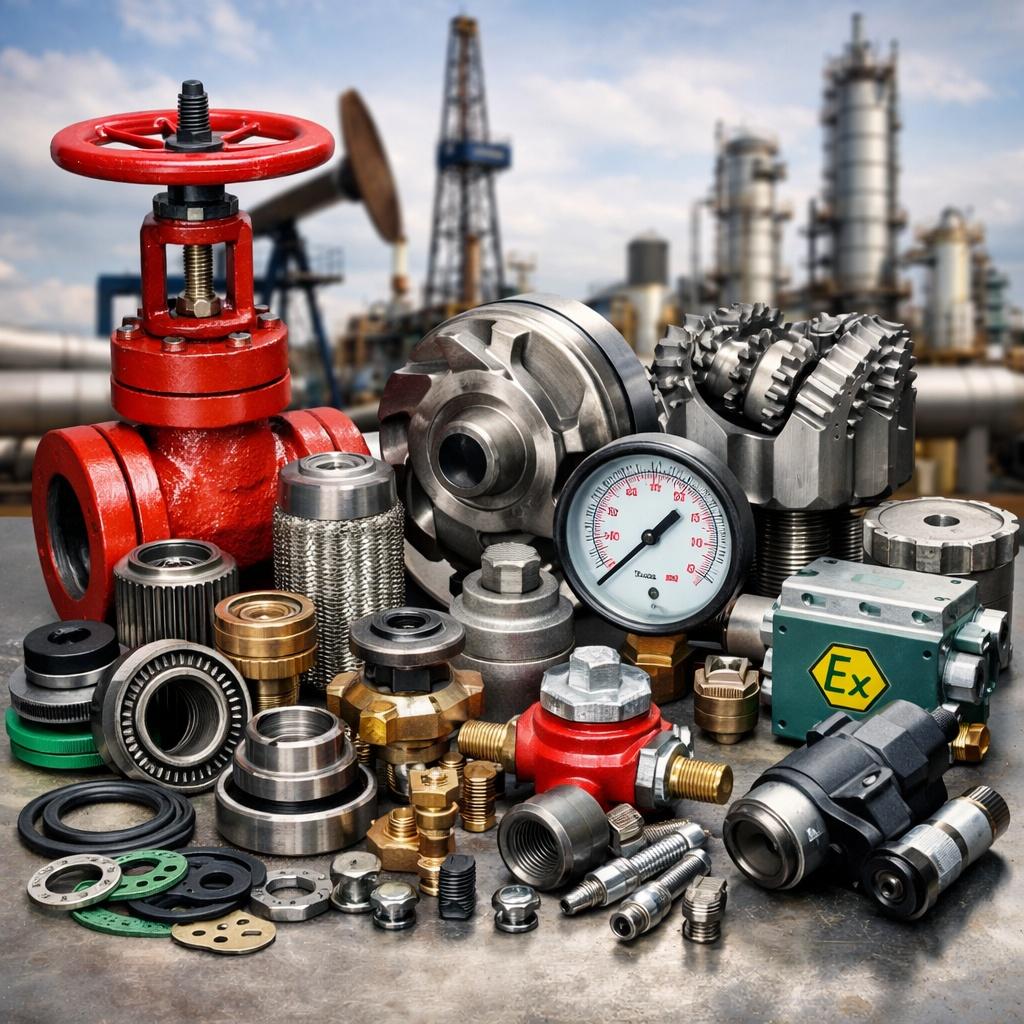 Assembly equipment often operates under demanding conditions. Tightening tools, controllers, pneumatic equipment, electrical tools and other production systems may be used repeatedly over thousands of production cycles. Even equipment designed for industrial environments contains components that will eventually wear or require replacement.
This is why access to dependable spare parts becomes an essential part of maintaining production. Companies looking for support for industrial assembly equipment can turn to Atlas Copco ITBA when considering spare-parts solutions and management for their assembly systems. Planning for spare parts before a failure occurs gives maintenance teams more control over how quickly problems can be addressed.
A failed component can have consequences that extend far beyond the individual tool. If a critical assembly station cannot operate, work may need to be slowed down, redirected or temporarily stopped. Employees may have to wait for equipment to become available, while maintenance personnel spend valuable time diagnosing the problem and locating replacement components.
These interruptions can become particularly costly in production environments where several processes depend on one another. A delay at one station can affect downstream operations, disrupt production targets and create additional pressure elsewhere in the plant.
Keeping essential replacement components available reduces the risk that a relatively minor technical problem develops into a prolonged production interruption. Maintenance personnel can replace worn or damaged parts and return equipment to service without waiting for a new component to arrive.
The same principle applies to planned maintenance. Components that are known to experience wear can be replaced during scheduled servicing rather than after they have already caused a malfunction. This makes maintenance more predictable and helps production managers coordinate servicing with planned stops or periods of lower production activity.
The cost of downtime goes beyond the failed component
When discussing spare parts, it is easy to focus primarily on the purchase price of the replacement component. In practice, however, the cost of a production interruption can be considerably more significant than the cost of the part itself.
Downtime may affect labour utilisation, output, delivery schedules and overall equipment efficiency. If the affected equipment performs a critical operation, production could remain restricted until the problem has been resolved. The longer it takes to identify and obtain the correct replacement part, the greater the potential impact.
There can also be secondary consequences. Production teams may need to reorganise work, maintenance personnel may have to prioritise emergency repairs over planned tasks and managers may need to adjust schedules. In some environments, unfinished products or work in progress may accumulate around the affected production stage.
For these reasons, spare-parts availability should be considered as part of operational risk management. The objective is not necessarily to eliminate every possible interruption, which would rarely be practical, but to minimise the duration and consequences of equipment-related downtime.
Criticality is an important factor. Some components can fail without immediately stopping production, while others may be necessary for the operation of an entire assembly station. Identifying this difference allows companies to prioritise the parts that deserve to be kept in stock.
Usage frequency should also be considered. Parts that experience regular wear may justify permanent stock because replacement demand is relatively predictable. Components with a long service life may require a different approach, particularly if they can be obtained quickly when required.
By analysing these factors, companies can develop a spare-parts strategy that reflects the actual risks within their production environment rather than relying on reactive purchasing.
Finding the right balance in spare-parts inventory
Although insufficient spare-parts availability can create unnecessary downtime, keeping excessive quantities of components in stock also has disadvantages. Inventory occupies space and ties up capital that could otherwise be used elsewhere in the business.
The challenge is therefore to maintain enough stock to support production without accumulating large quantities of parts that may rarely or never be used.
A well-organised inventory should begin with an understanding of the installed equipment. Maintenance teams need to know which tools and systems are being used, which components are interchangeable and which spare parts are specific to individual applications.
Standardisation can make this significantly easier. When multiple assembly stations use compatible equipment or components, a smaller common inventory may be able to support several parts of the production line. This reduces unnecessary duplication and makes stock easier to control.
Historical maintenance data can provide further guidance. If records show that a particular component is replaced frequently, maintaining appropriate stock becomes easier to justify. Conversely, parts that have remained unused for years may require reassessment.
Lead time is another important consideration. A relatively inexpensive component may still deserve priority if obtaining a replacement normally takes a long time. On the other hand, a component that can be supplied quickly may not need to be held in large quantities.
Companies should therefore consider spare-parts inventory as a dynamic system rather than something that is established once and then forgotten. Production equipment changes, operating conditions develop and maintenance experience grows over time. Inventory levels should be reviewed accordingly.
Good organisation also matters. A spare part provides little value if technicians cannot locate it when an urgent repair is required. Clear identification, accurate inventory records and defined storage locations help ensure that available components can actually be used efficiently.
Correct components support equipment performance and quality
Replacing a worn part is not simply about making a tool operate again. The replacement also needs to support the intended performance of the equipment.
Industrial assembly processes can depend on controlled and repeatable operation. Tools may be responsible for tightening, fastening or other processes where consistency directly affects the finished product. Using unsuitable components can therefore create problems even if the equipment appears to function.
Correct spare parts help maintenance personnel restore equipment according to its intended configuration. This is particularly important where tools are integrated with controllers, software or automated production systems.
Maintenance work should also consider the condition of surrounding components. When one part has failed because of wear or unusual operating conditions, technicians may need to inspect related parts rather than simply replacing the visibly damaged item. This can help identify underlying issues before the equipment returns to full production.
Documentation plays an important role here. Accurate tool identification, maintenance records and component information make it easier to determine what is needed and avoid ordering incorrect parts.
The process becomes especially important in plants with large numbers of tools. Similar-looking equipment may use different components depending on model, configuration or application. A structured approach to spare-parts identification reduces the risk of mistakes and helps maintenance teams work more efficiently.
Reliable spare-parts management can also support preventive maintenance. Instead of waiting for complete failure, components can be replaced when inspection, service history or operational data indicates that they are approaching the end of their useful life.
Spare-parts planning should develop with the production system
Manufacturing environments rarely remain unchanged. New products are introduced, assembly stations are modified and production volumes fluctuate. Tools may be replaced or upgraded as new technology becomes available. Spare-parts strategies should evolve alongside these changes.
When new assembly equipment is introduced, spare-parts requirements should ideally be considered from the beginning. Maintenance teams can identify critical components, expected wear items and likely replacement needs before the equipment becomes fully integrated into production.
The same applies when equipment is removed from service. Components held specifically for obsolete tools may no longer need to occupy valuable inventory space. However, companies should first determine whether those parts are shared with equipment that remains in operation.
Regular reviews can therefore improve both availability and inventory efficiency. Maintenance records, equipment utilisation and previous failures provide useful information for deciding whether stock levels remain appropriate.
Cooperation between production, maintenance and purchasing teams is also valuable. Maintenance personnel understand technical requirements and failure patterns, while purchasing teams manage procurement and supplier relationships. Production managers understand the operational consequences when particular equipment becomes unavailable.
Bringing these perspectives together makes spare-parts planning more closely aligned with actual production needs.
Ultimately, effective spare-parts management is about preparedness. Assembly tools and equipment are expected to deliver reliable performance, but every mechanical or electronic system will eventually require maintenance. Companies that anticipate those requirements are better positioned to handle both routine servicing and unexpected faults.
The right spare parts, available at the right time, help maintenance teams restore equipment more efficiently, reduce unnecessary disruption and protect the continuity of production. Rather than being an isolated maintenance expense, spare-parts availability becomes part of a broader strategy for keeping industrial assembly processes dependable, productive and ready for changing manufacturing demands.